
Timber Floor Sanding & Water-Based Coating Sydney | Church Restoration
60-Year-Old Church Timber Floor Restoration | Alamo Floor Sanding Sydney
FAQ: Timber Floor Sanding & Water-Based Coating
How long does timber floor sanding take?
The timeframe depends on the size, condition and type of timber flooring, as well as the existing coating and finishing system. A straightforward residential project can be significantly faster than a heavily used commercial or community building. The Strathfield church project took approximately three weeks because of the multiple old coatings, uneven areas and the church's regular Thursday and Saturday services.
Can old timber floors with multiple layers of coating be sanded?
Yes. Professional timber floor sanding can remove old coatings and prepare the timber for a new finishing system. However, multiple layers of old coating can significantly increase the preparation time and require careful sanding.
Is water-based coating suitable for timber floors?
Water-based floor coatings can be an excellent option for many timber flooring applications. The appropriate coating depends on the existing timber, desired appearance, expected traffic and project requirements. A professional assessment is recommended before selecting a finish.
How many coats of water-based floor coating are required?
The number of coats depends on the specific coating system and project requirements. In this Strathfield church project, three coats of water-based coating were applied as part of the finishing process.
Can you sand hardwood and blackbutt timber floors?
Yes. Professional floor sanding can be carried out on many timber species, including hardwood and blackbutt, subject to an assessment of the existing floor condition.
Can uneven timber flooring be restored?
Depending on the cause and severity of the unevenness, professional sanding and floor preparation may improve the surface. However, not every structural or subfloor issue can be corrected through sanding alone. An assessment is important before work begins.
Can a church remain operational during floor restoration?
Potentially, yes, but the project needs careful planning. The Strathfield church project demonstrates how commercial timber floor sanding can be scheduled around regular building use. In that project, the church was able to continue services while the restoration was completed in stages.
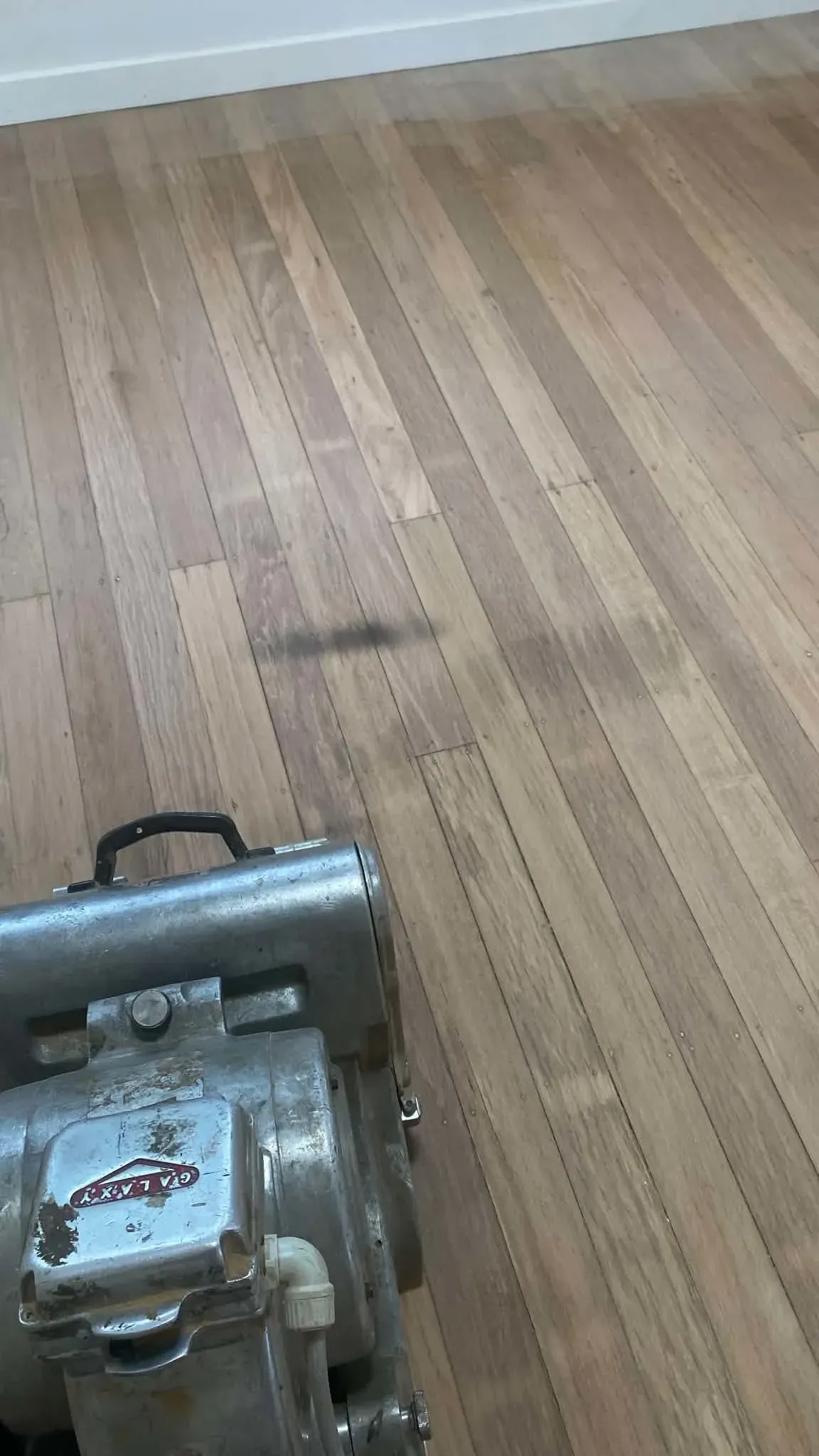
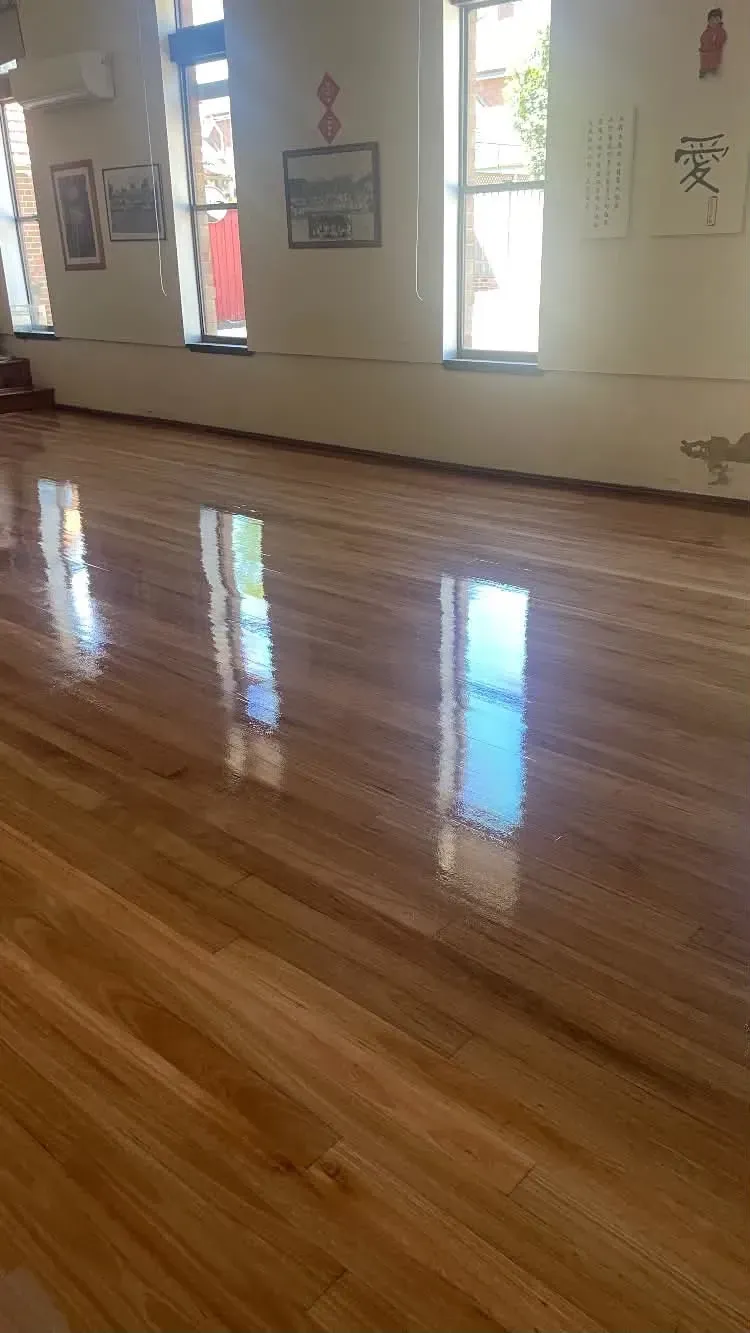
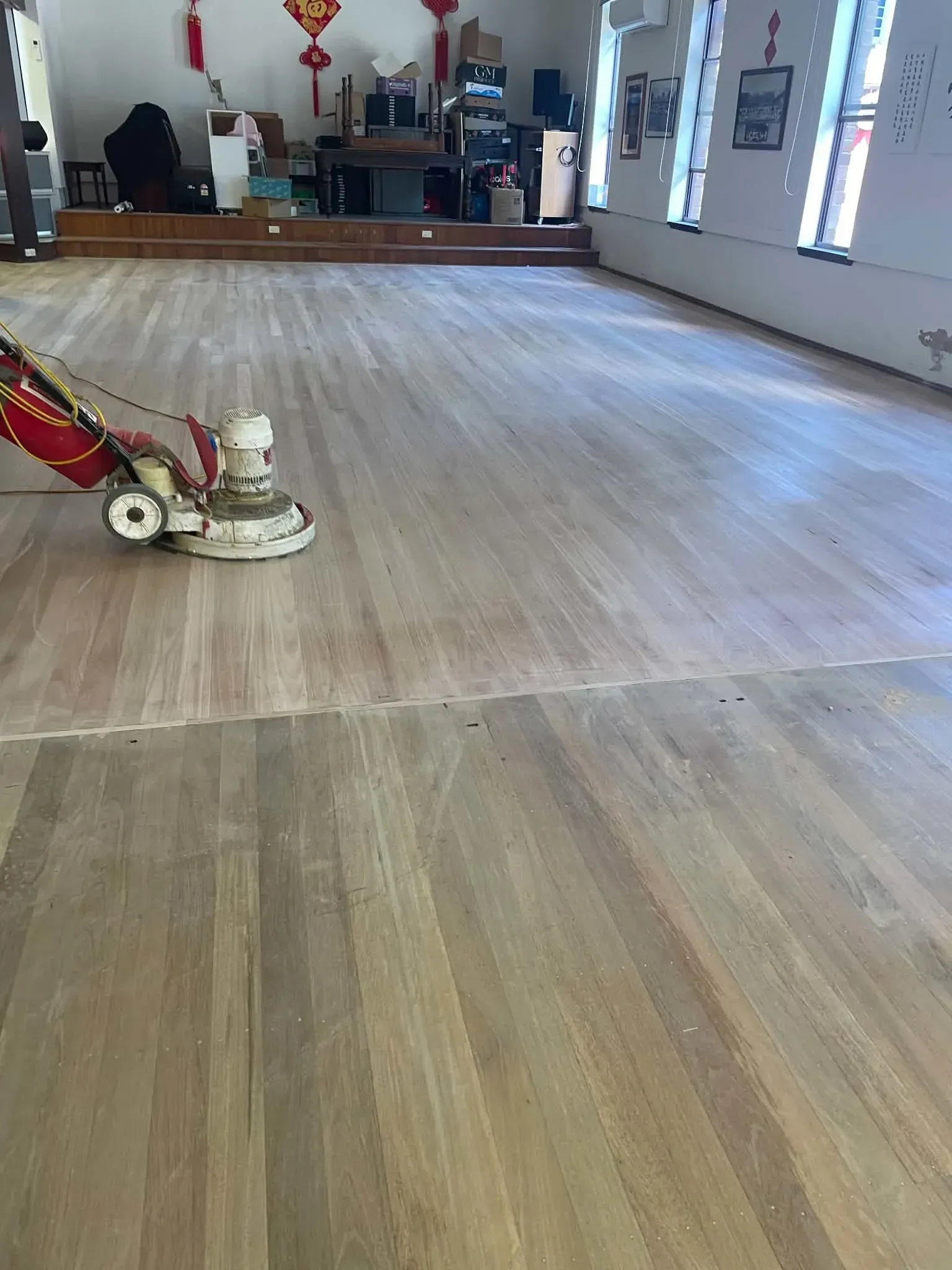
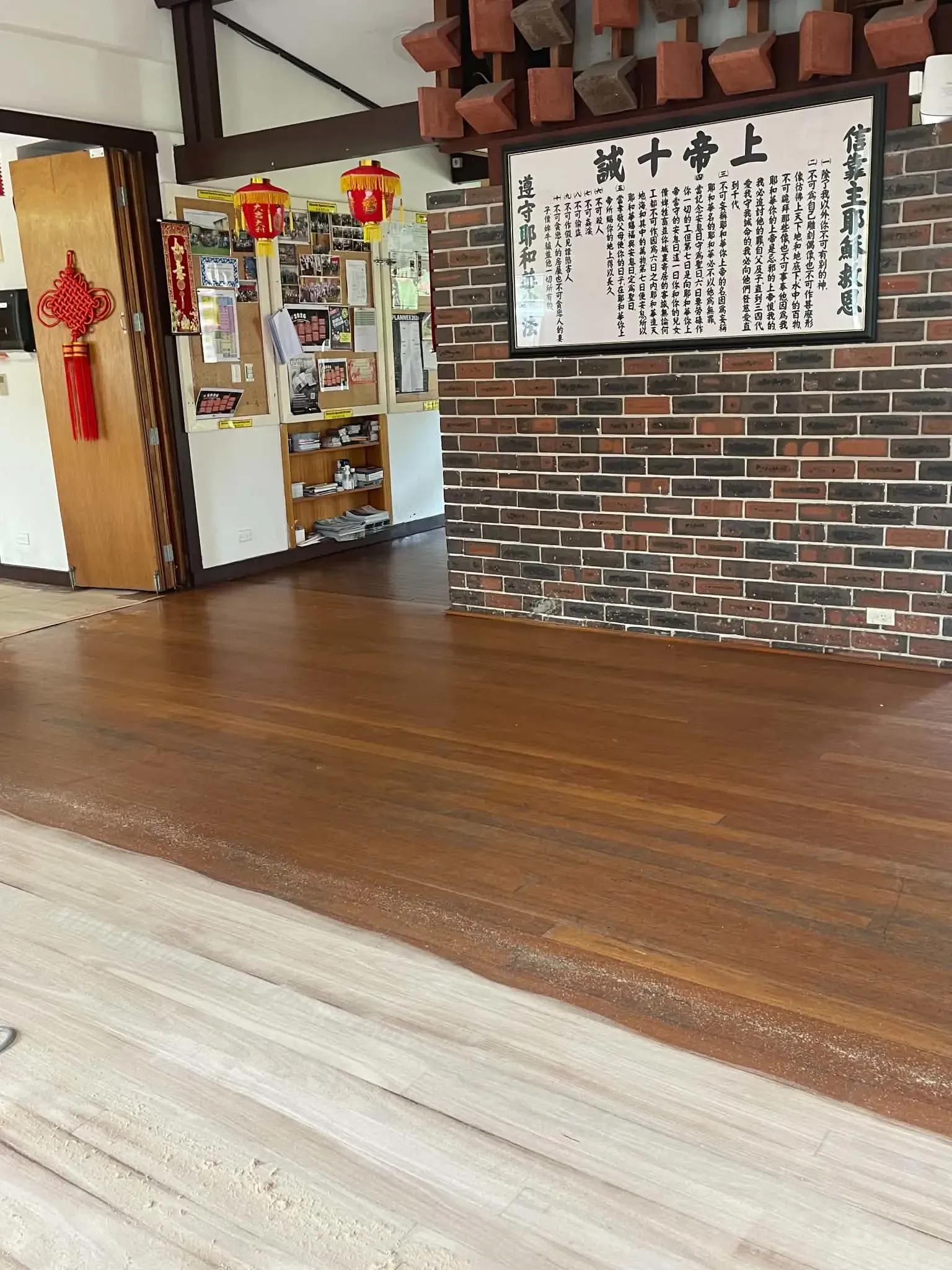
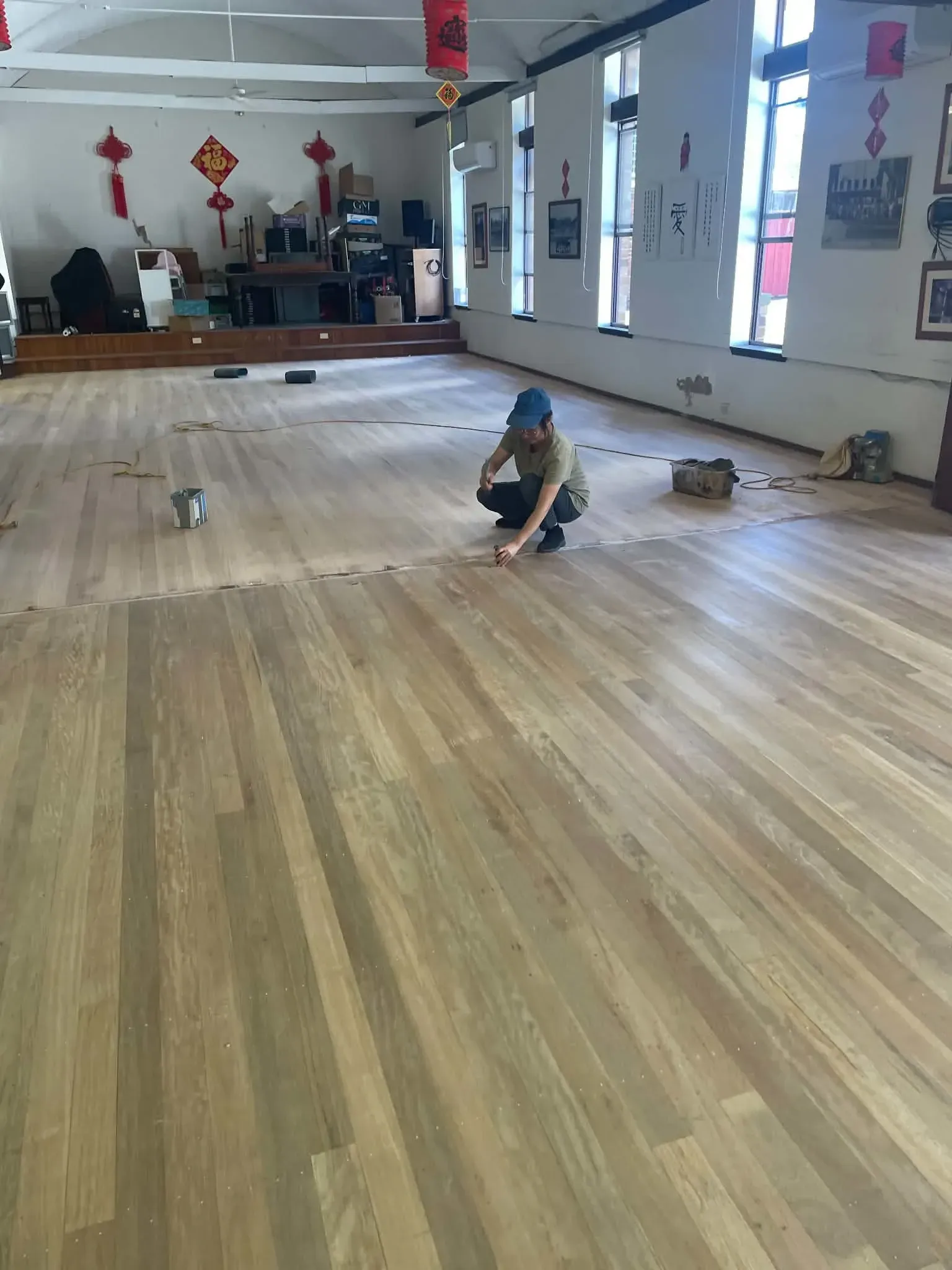
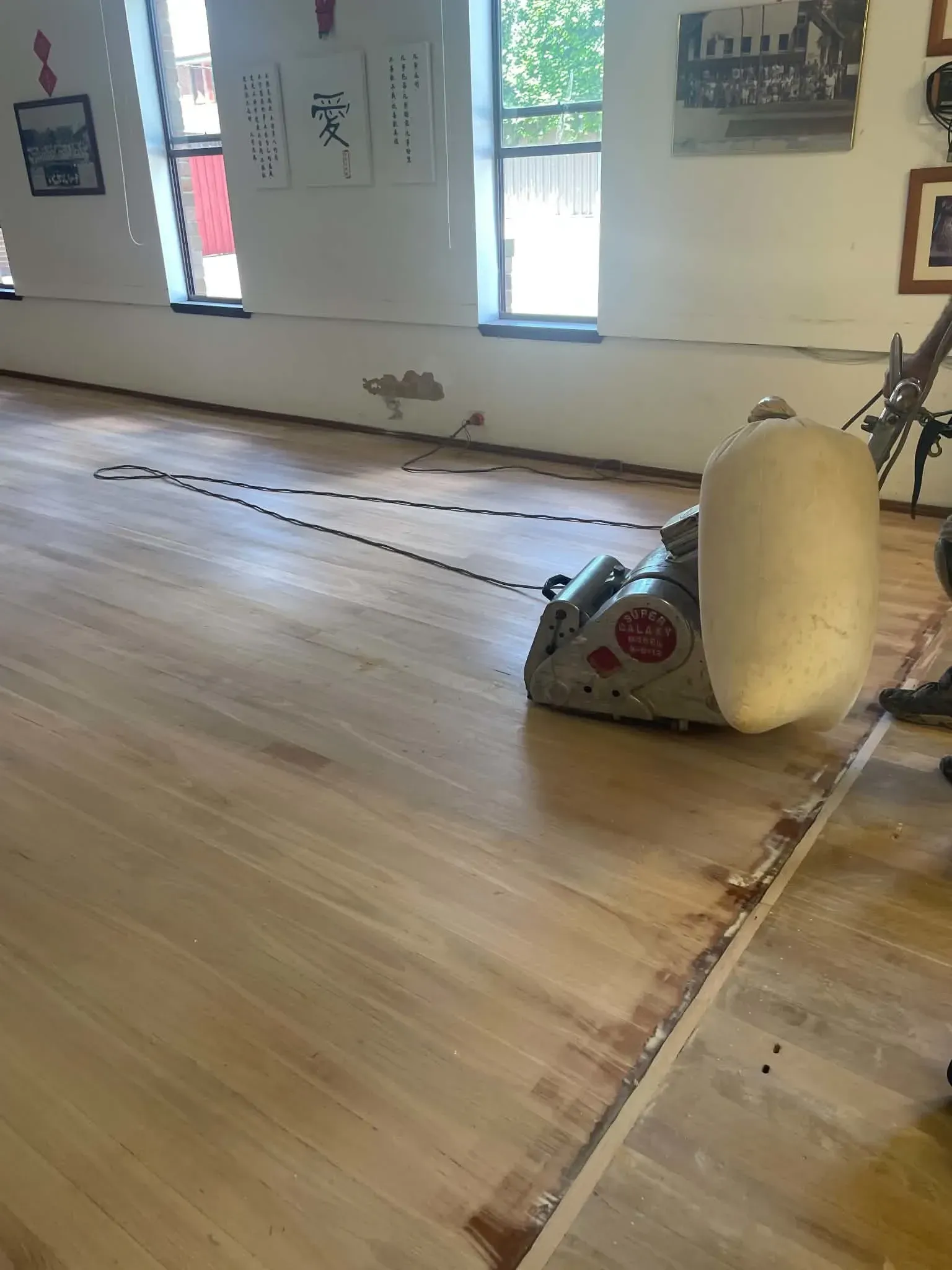
60-Year-Old Church Timber Floor Restoration in Sydney
A Challenging 110m² Timber Floor Sanding & Water-Based Coating Project
At Alamo Floor Sanding, every timber floor has its own history, condition and challenges. Some floors require straightforward sanding and polishing, while others require careful planning, extensive preparation and a restoration approach that takes into account the age of the building, the condition of the timber and how frequently the floor is used.
One recent project in Strathfield, Sydney, was a particularly challenging example.
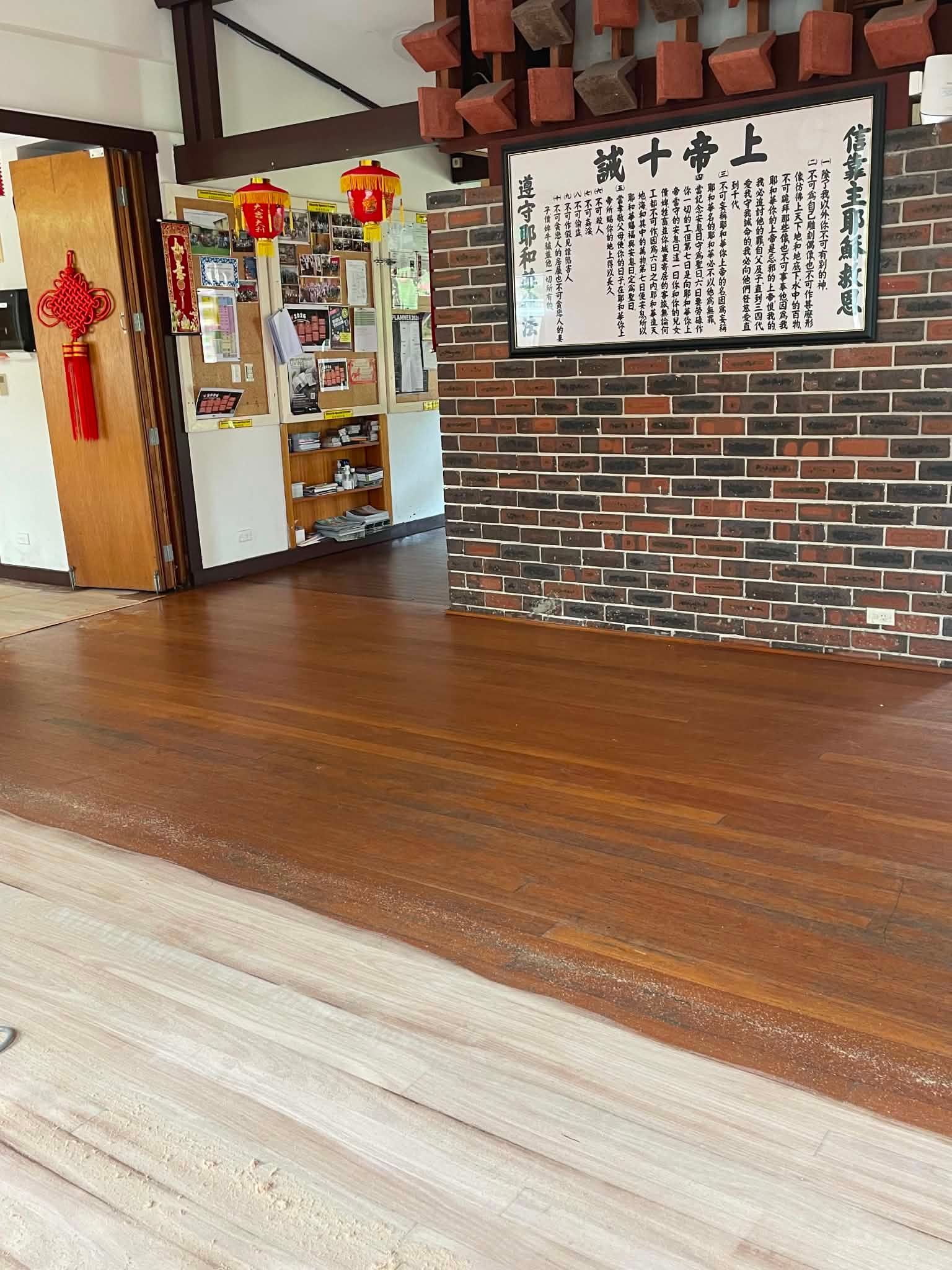
Alamo Floor Sanding was engaged to restore approximately 110m² of timber flooring inside a 60-year-old church. The flooring consisted of a mixture of hardwood, tallowwood and blackbutt timber, with the floor showing the effects of many years of heavy use.
The project required considerably more than simply sanding the floor and applying a new coating.
There were multiple layers of old floor coatings, sections of uneven flooring that required attention, and an important logistical challenge: the church continued to operate regular services every Thursday and Saturday.
This meant the floor had to be restored around a busy schedule while still allowing the church community to continue using the building.
For Alamo Floor Sanding, this project demonstrated why experience, careful planning and reliability are so important when undertaking timber floor sanding and polishing in heavily used commercial and community buildings.
The Project at a Glance
Location: Strathfield, Sydney NSW
Property: Approximately 60-year-old church
Floor area: Approximately 110m²
Flooring: Hardwood, tallowwood and blackbutt
Services: Timber floor sanding, floor preparation, floor levelling, floor polishing and water-based coating
Coating: Water-based finish applied in three coats
Project duration: Approximately 3 weeks
Main challenge: Heavy ongoing use of the church and regular Thursday and Saturday services
Challenge 1: Removing Multiple Layers of Old Floor Coating
One of the biggest challenges was the existing coating system.
Over many years, multiple layers of coating had been applied to the timber floor. Rather than simply sanding a single worn finish, the Alamo team needed to carefully remove the accumulated layers and prepare the timber properly for the new finish.
This is an important part of professional timber floor sanding and restoration.
If an old coating is not adequately removed, it can affect the appearance, adhesion and consistency of a new floor coating. Different areas may also react differently depending on how much old coating remains.
Careful sanding was essential
The sanding process therefore required patience and multiple stages of preparation.
The objective was to progressively remove the old coating and worn surface while exposing a suitable timber surface for the new finishing system.
Because the floor contained different types of timber, including hardwood, tallowwood and blackbutt, the sanding also needed to be approached carefully to achieve a consistent overall appearance.
This is where the experience of a professional floor sanding contractor in Sydney becomes particularly important.
The goal isn't simply to sand as quickly as possible.
The goal is to understand the condition of the existing floor, select an appropriate sanding approach and prepare the timber properly for the finishing stage.
Challenge 2: Working Around Thursday and Saturday Church Services
The second major challenge was the church's schedule.
This wasn't an empty building where the entire floor could simply be closed for several weeks.
The church continued to require access for its regular activities and services, particularly Thursday and Saturday.
For this reason, scheduling became a major part of the project.
Alamo Floor Sanding had to carefully coordinate:
- When sanding could begin
- When sections of the floor could be used
- When the church needed access
- Drying time
- Finishing stages
- Coating application
- Curing time
- When the floor could safely be returned to regular use
This required a different approach from a normal residential timber floor sanding project.
Keeping the church operational
Rather than rushing the sanding and coating process, the decision was made to complete the sanding and allow the church to continue operating with the bare, freshly sanded timber floor for approximately one week.
This gave the church the flexibility it needed to continue its regular services while allowing Alamo Floor Sanding to return at the appropriate time to complete the finishing work.
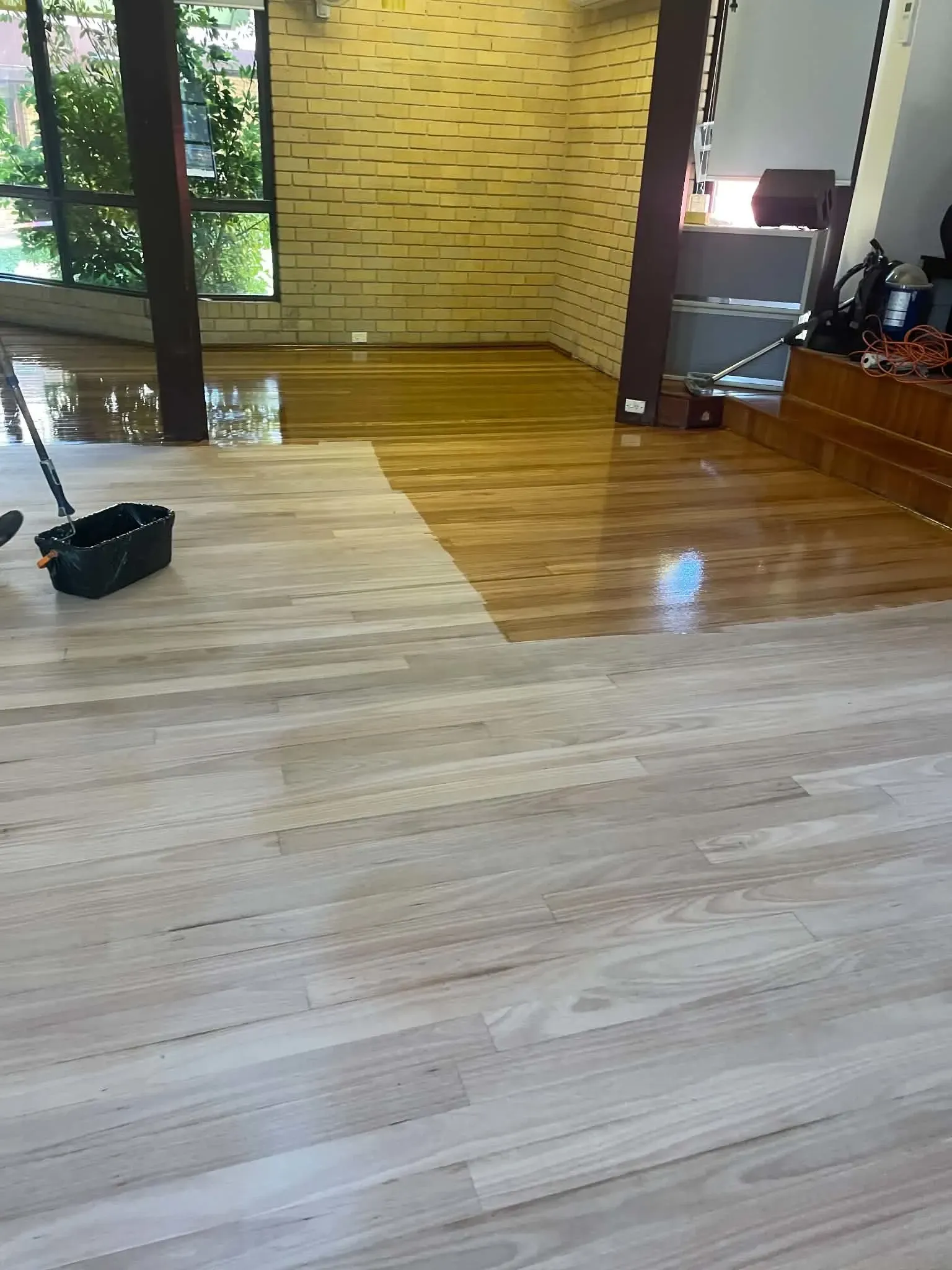
The final stage involved applying the floor finish and three coats of water-based coating.
Because of the building's heavy usage and scheduling requirements, the entire project took approximately three weeks to complete.
This was not simply a matter of how many square metres could be sanded in a day.
It was about finding a practical solution that worked for both the flooring and the church.
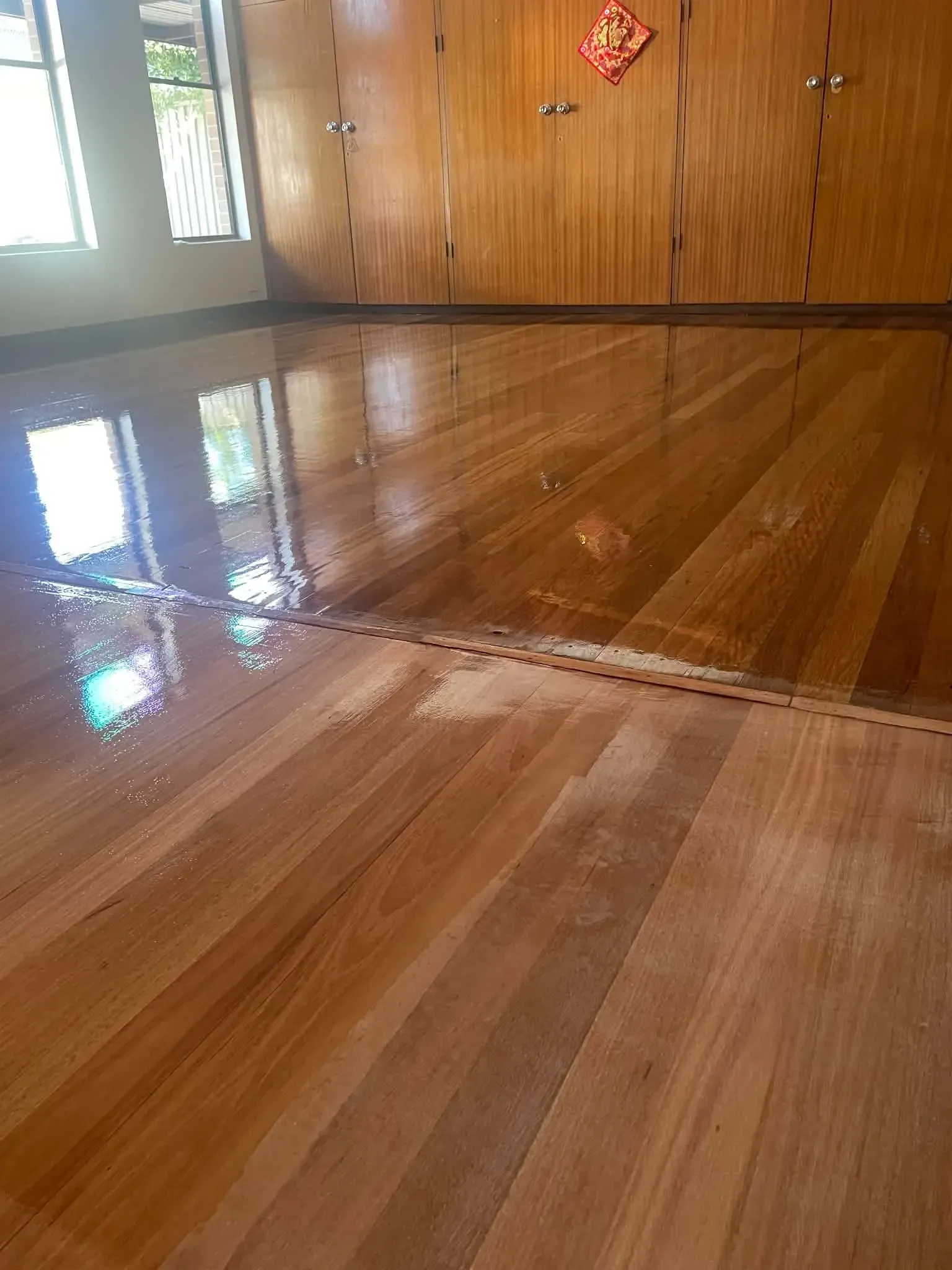
Challenge 3: Uneven Sections of the Timber Floor
Another issue identified during the project was that some areas of the floor were not level.
Uneven flooring can become more noticeable after sanding and refinishing, particularly when light reflects across the finished surface.
Simply applying a new coating would not solve this underlying issue.
The affected areas therefore required additional preparation and attention to achieve a more consistent and level result.
This is an important consideration when restoring older timber floors.
A 60-year-old floor can contain variations resulting from years of foot traffic, previous repairs, timber movement and the natural ageing of the building.
Professional timber floor restoration therefore requires more than making the surface look shiny. The condition of the existing floor needs to be assessed before determining the appropriate restoration process.
Why We Chose a Water-Based Floor Coating
After the sanding and preparation stages were completed, the floor was finished using a water-based coating system.
Water-based floor coatings are a popular option for many Sydney residential and commercial flooring projects because they can provide a clear, contemporary appearance while allowing the natural characteristics of timber to remain visible.
For this particular church project, the finishing system needed to provide an attractive appearance while also being suitable for a floor that experiences heavy foot traffic and frequent use.
Alamo Floor Sanding applied three coats of water-based coating as part of the finishing process.
The additional coats formed part of the finishing system selected for the project and helped provide the level of protection and finish required for this busy environment.
Sanding, Polishing and Finishing a High-Use Timber Floor
Churches, halls, schools, offices and other community buildings can be particularly demanding environments for timber flooring.
Unlike a private home where certain areas may receive relatively little traffic, a church floor can experience:
- Large numbers of people walking across the floor
- Regular weekly services
- Furniture movement
- Events and gatherings
- Cleaning
- Heavy traffic concentrated in particular areas
For this reason, choosing the right timber floor finish is an important part of the restoration process.
The sanding stage creates the prepared timber surface, while the finishing system provides the final appearance and protection.
At Alamo Floor Sanding, we work with different finishing options including water-based, oil-based and polyurethane finishes, depending on the requirements of the floor and the customer's desired result.
The Final Result
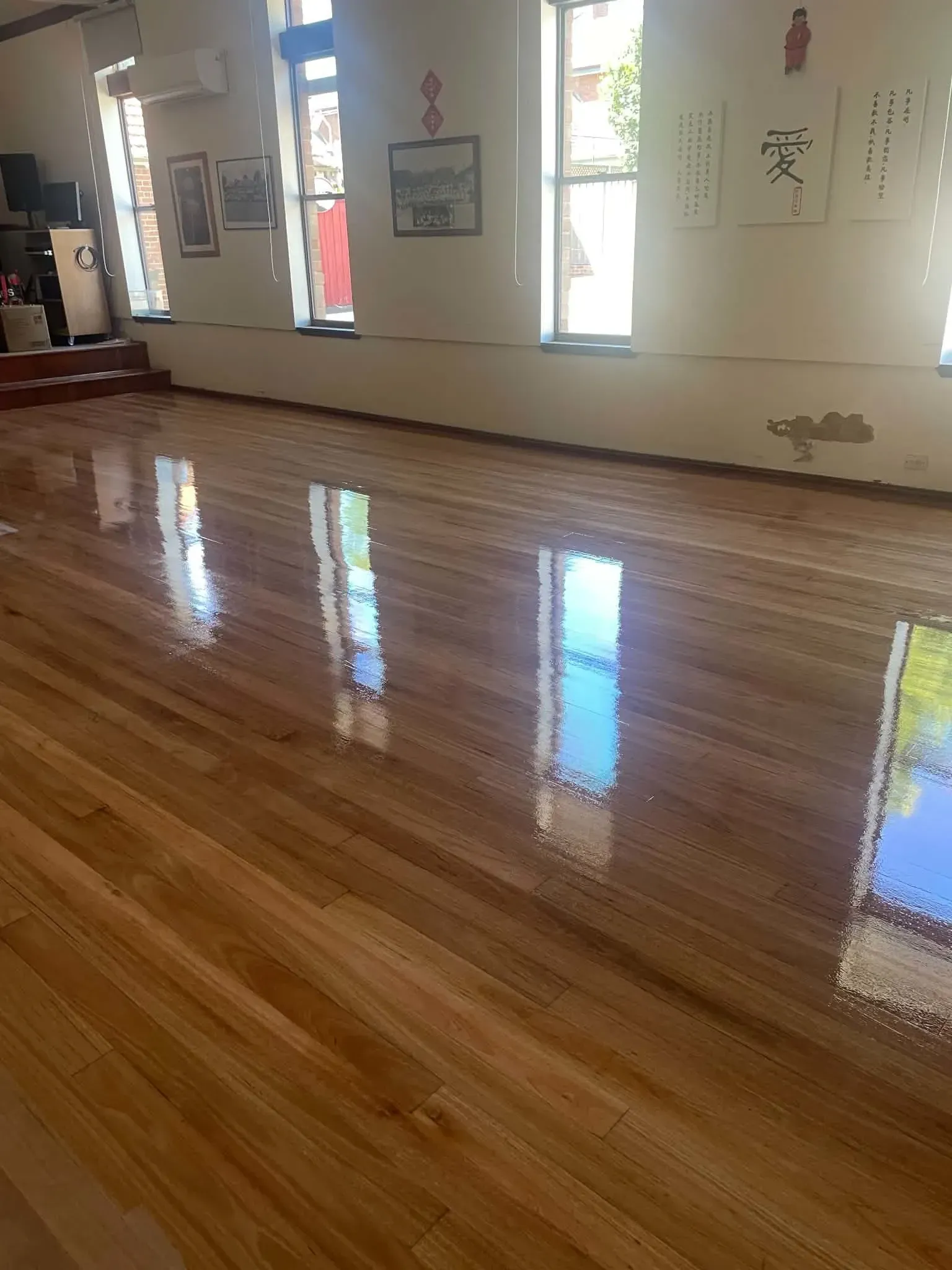
After approximately three weeks of carefully coordinated work, the church's timber floor was transformed.
The old accumulated coatings were removed, the timber surface was professionally sanded and prepared, uneven sections were addressed, and the floor was completed with three coats of water-based coating.
The result was a refreshed timber floor that was suitable for the church's ongoing use while showcasing the natural character of the existing timber.
Most importantly, the customer was very happy with the finished result.
For Alamo Floor Sanding, that satisfaction is particularly important on a project where the building remained operational throughout much of the restoration process.
What This Project Demonstrates About Professional Floor Sanding
This Strathfield church project is a good example of why professional floor sanding and polishing in Sydney is not simply about putting a machine over a timber floor.
Every project needs to be assessed individually.
In this case, Alamo Floor Sanding had to consider:
The age of the floor
A 60-year-old floor can require considerably more preparation than a relatively new timber floor.
Multiple existing coatings
Several old layers needed to be carefully removed before the new finishing system could be applied.
Different timber species
Hardwood, tallowwood and blackbutt were present in the floor.
Uneven sections
Some areas required additional preparation to improve the level and consistency of the floor.
Heavy traffic
The church floor needed to cope with regular and substantial use.
A restricted working schedule
Regular Thursday and Saturday services meant that the restoration needed to be carefully planned.
Drying and finishing requirements
The timing of the water-based coating application needed to be coordinated with the church's use of the building.
Looking After Your Restored Timber Floor
Once a timber floor has been professionally sanded and coated, appropriate maintenance is important to preserve the appearance and extend the life of the finish.
For a high-traffic property such as a church, school, office or community hall, regular maintenance is particularly important.
Good floor maintenance generally includes:
- Regular removal of dirt and grit
- Prompt cleaning of spills
- Using cleaning products suitable for the particular floor finish
- Avoiding excessive water
- Using suitable protective pads under furniture
- Monitoring high-traffic areas
- Addressing wear before the timber becomes severely damaged
A professional timber floor maintenance program can also help identify areas that may require attention before a complete restoration becomes necessary.
Alamo Floor Sanding – Reliable Sydney Timber Flooring Specialists
Established in 1999, Alamo Floor Sanding has extensive experience working with timber floors in residential, commercial and industrial environments throughout Sydney.
Our work has included demanding projects for hotels, banks, schools, churches, commercial properties and other high-use environments.
We understand that every project is different.
A residential timber floor may require a completely different approach from a busy church, school hall, office or commercial property.
Our focus is on providing a reliable, experienced and professional service, with careful attention to preparation, sanding, finishing and project scheduling.
Whether you require timber floor sanding, floorboard sanding, parquetry sanding, floor polishing, timber floor restoration, staining, floor maintenance or water-based floor coating, Alamo Floor Sanding can assess your existing flooring and recommend an appropriate solution.
Looking to restore your timber floors in Sydney?
Contact Alamo Floor Sanding for a free quotation.
📞
0403 082 909
🌐
www.alamofloorsanding.com.au
Reliable. Experienced. Professional.
